
Shifting Gears: A Beginner’s Guide to Driving a Manual Car
Intro
If you’ve ever wanted to learn how to drive a manual car, also known as a stick shift vehicle, you’re in the right place. Driving a manual car can be a rewarding experience that offers more control over your vehicle and a deeper connection to the driving experience. In this guide, we’ll take you through the step-by-step process of driving a manual car, from getting comfortable with your vehicle to shifting gears while driving. By the end of this guide, you’ll be well on your way to mastering the art of driving a manual car.
 Getting Comfortable with Your Vehicle
Adjusting to the interior of a manual car is your first step toward becoming a confident stick shift driver. Start by ensuring your seat position allows you to comfortably reach both the clutch pedal and the gear stick without straining. Your mirrors should be positioned so you have a clear view of the road and your surroundings, minimizing blind spots. Take a moment to acquaint yourself with the three pedals at your feet: the clutch on the far left, the brake in the middle, and the accelerator on the right. Familiarize yourself with the feel and positioning of the gear stick and practice moving it through the various gears, even before you turn on the engine. Also, locate and understand how to operate the handbrake, which is essential for starting and stopping on inclines. Engaging with these elements of your vehicle before you start driving will lay a solid foundation for your manual driving skills, ensuring you’re prepared for the next steps of starting the engine and hitting the road.
Starting the Engine Safely
Firstly, ensure your safety by fastening your seatbelt. With the vehicle in neutral, place the key into the ignition. This is a crucial step to avoid any unexpected vehicle movement that could occur if the car were in gear. Turn the key fully until you hear the engine come to life, signifying that the engine has started successfully. It’s essential at this stage to check that the gear stick is indeed in neutral. You can confirm this by gently moving it left and right; if it moves freely without resistance, it’s in the correct position. This initial check is critical for preventing the car from lurching forward or stalling when you start the engine. Once the engine is running, keep your foot on the clutch to prepare for moving into first gear, signaling you are ready to begin your journey. This preparation ensures a smooth transition from a stationary position to driving, laying the foundation for a safe and controlled driving experience.
 Engaging the Clutch and First Gear
With the engine idling smoothly, it’s time to engage first gear and prepare to move. Firmly depress the clutch pedal with your left foot to the floor to disengage the engine from the transmission. This action ensures that you can shift gears without grinding or damaging the gearbox. Carefully, move the gear stick from the neutral position into first gear. This is typically achieved by pushing the gear stick to the left and then forward. It’s important to do this with precision to ensure the gear fully engages. Keep your right foot on the brake pedal during this process to prevent the car from accidentally moving. This step is crucial in the sequence of driving a manual car as it sets the stage for finding the bite point and smoothly starting your drive. Remember, practice will make this movement feel natural and help you become more comfortable with the manual driving process.
Finding the Bite Point
Gradually releasing the clutch pedal introduces you to a critical phase in manual driving—the bite point. This is the moment when you’ll notice a unique sensation, a gentle vibration, indicating that the clutch plates are beginning to engage. Recognizing this point is essential for a smooth transition into motion without stalling the vehicle. To find it, you’ll need to lift your foot off the clutch pedal very slowly, paying close attention to the changes in your car’s response. This process might require several attempts to master, but it’s a skill that becomes intuitive with practice. Achieving a perfect balance at the bite point is a cornerstone of proficient manual driving, enabling you to control the car’s movement with precision. As you become familiar with this feeling, you’ll learn to coordinate your actions with the accelerator pedal, setting the stage for a seamless driving experience. Remember, patience is key; allow yourself time to get accustomed to this critical aspect of driving a manual car.
 Moving Off and Handling the Handbrake
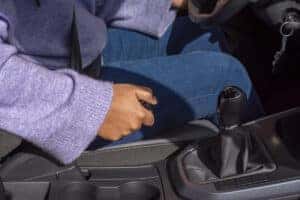
Once you’ve comfortably located the bite point, it’s time to focus on transitioning the car into motion while managing the handbrake. Begin by holding the clutch at the bite point—where the car’s engine and transmission engage. Your next move involves managing the handbrake, which might currently be keeping your car stationary, especially if you’re on an incline. Gently release the handbrake with your right hand while maintaining the clutch’s position and preparing to increase the accelerator’s pressure with your right foot. As the handbrake lowers, you’ll feel the car’s natural tendency to start moving forward. At this juncture, ensure you modulate the accelerator pedal carefully, increasing engine revs to prevent the car from stalling. This step requires a harmonious balance between clutch and accelerator pedals—a skill that becomes second nature with experience. As the car begins its forward motion, keep a steady pace, allowing for a smooth transition into the flow of traffic. Remember, this process might seem intricate at first, but it’s a crucial skill for seamless driving in a manual car, ensuring you maintain control and safety as you set off on your drive.
Accelerating and Clutch Control
As your vehicle begins to inch forward, it’s critical to manage the delicate dance between the clutch and the accelerator. Gradually easing off the clutch with your left foot, simultaneously apply gentle pressure to the accelerator with your right. This intricate balancing act is pivotal for a smooth transition into full motion. A too-quick release of the clutch without adequate acceleration can cause the car to stall, interrupting your drive and potentially causing stress in traffic situations. Conversely, overly aggressive acceleration while the clutch is engaged can lead to rapid wear of the clutch plate. Achieving a harmonious interaction between these two controls will ensure your vehicle moves forward smoothly and efficiently, minimizing wear and tear while maximizing control and performance. Practice in a safe, low-traffic area can help you refine this skill, making the process instinctual. As you gain confidence, this balance between clutch and accelerator becomes a seamless part of your driving experience, enhancing your enjoyment and control of a manual transmission vehicle.
 Shifting Gears While Driving
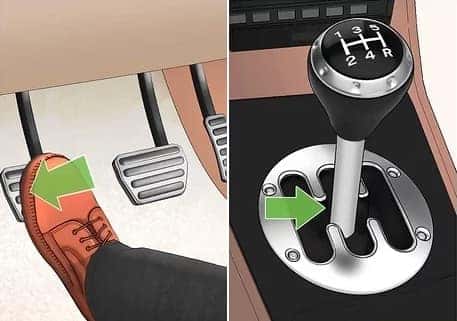
Navigating the art of gear shifting while on the move is a crucial skill for manual car drivers. Once you’re comfortably driving in first gear and it’s time to shift up, your approach should be smooth and synchronized. Begin by lightly pressing down on the clutch pedal with your left foot, simultaneously easing off the accelerator to reduce engine speed. With a gentle but firm hand, guide the gear stick into the next gear using the layout diagram as your guide. It’s important to match the gear selection to your current speed and the driving conditions to ensure a seamless transition. Once the gear is engaged, gradually release the clutch while simultaneously applying pressure to the accelerator to maintain a smooth and steady increase in speed. This technique minimizes wear on the transmission and keeps the drive comfortable. As you progress, downshifting will become necessary when slowing down or coming to a stop, which involves a similar process in reverse order. Mastery of gear shifting not only enhances the driving experience but also contributes to the optimal performance and longevity of your vehicle. Practice in various driving scenarios will help refine your technique and build confidence in your abilities as a manual car driver.
 Coming to a Stop
As you prepare to bring your vehicle to a halt, smoothly press down on the clutch pedal with your left foot to ensure the engine is disengaged from the transmission. Simultaneously, begin to apply gentle pressure to the brake pedal with your right foot to reduce your speed gradually. Shift the gear stick into neutral position; this step is essential as it disconnects the engine’s power from the wheels, allowing the car to stop smoothly without stalling. While in neutral, ensure both the clutch and brake pedals are adequately engaged until the vehicle comes to a complete stop. Once stationary, activate the handbrake to secure the car in place, preventing it from rolling. This method of coming to a stop ensures a safe and controlled halt, preserving the mechanical integrity of your manual transmission and providing a comfortable stopping experience for both driver and passengers.
1 comment(s) so far on Shifting Gears: A Beginner’s Guide to Driving a Manual Car
Quite educative